
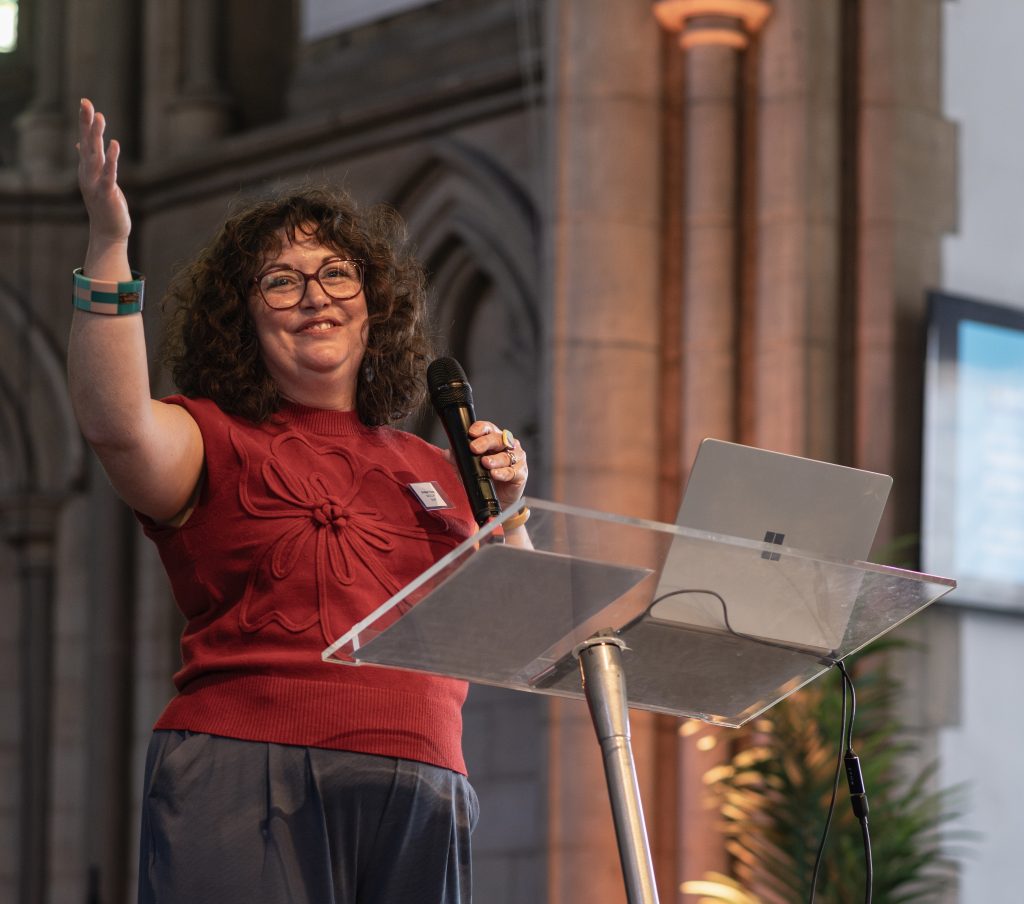
Bridget Young, NACCOM’s Director, opened our Annual Conference on 25 March in Leeds with a quote from the writer James Baldwin, who famously said, “Not everything that is faced can be changed, but nothing can be changed unless it is faced.”
This year’s conference marked 20 years since NACCOM was set up by a group of dedicated volunteers who gathered together to say no to the destitution they saw in their communities.
A timeline displayed in the main entrance charted these years, of growth, activism, solidarity and welcome, driven by a movement of passionate individuals and incredible organisations challenging homelessness and destitution within the asylum and immigration system.
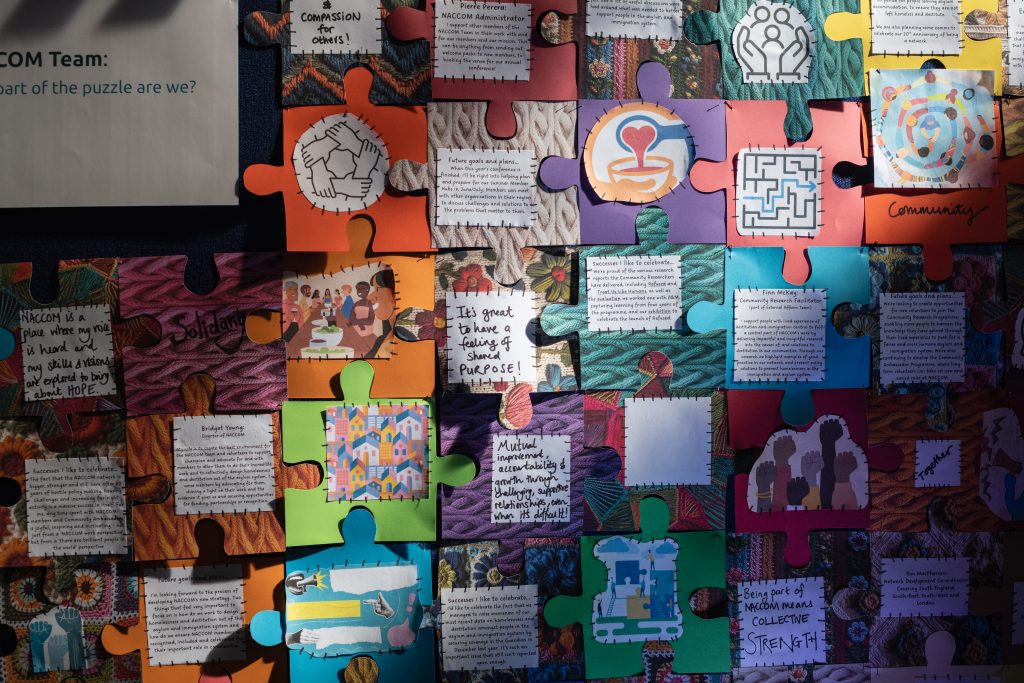
As we approached our 20th year, we have been reflecting on the nature of the NACCOM network, and the strength and solidarity we derive from our members and supporters. We were introduced to the concept of craftivism by the founder of the Craftivist Collective, Sarah P Corbett. Craftivism is a form of gentle resistance that uses hand-crafted jigsaw pieces as a catalyst for conversation, connection, and positive social change. This provided the theme for our conference – a sense that we are all part of a jigsaw puzzle that makes us stronger and more resilient.
Attendees were each given a pack with a cloth puzzle piece in it they were invited to take home and decorate with a message of solidarity. Sarah addressed the conference and ran two workshops, allowing participants to spend some time gently crafting and reflecting on their own work and how they fit into the NACCOM puzzle.
As Sarah said: “We’re all part of the puzzle. If you aren’t there, there will be a little piece of the puzzle that is missing in the shape of you”.
The infrastructure of solidarity
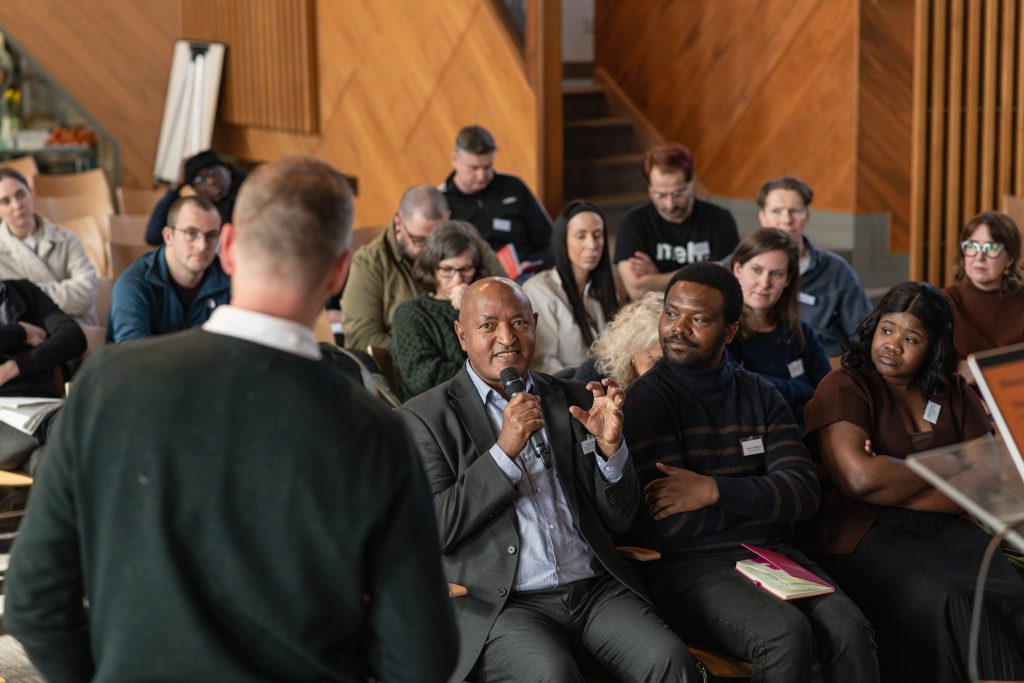
The theme of our 2026 conference was activism, welcome, and solidarity. As Professor of Human Geography Jonny Darling reminded us in his keynote speech, since NACCOM’s conception in 2006 “Britain has seen eight Prime Ministers, 13 Home Secretaries, and an exhausting array of legislative and policy changes. We’ve been confronted with the privatisation of asylum accommodation and support contracts, the establishment of resettlement routes for Afghan and Syrian refugees, proposals to deploy ‘wave machines’ in the English Channel and plans to outsource Britain’s responsibilities to Rwanda”. But in response to these policies, an active opposition has grown and diversified which Jonny calls “an infrastructure of solidarity”.
“We are living through dangerous and insecure times,” Jonny said. “The divisive politics of right-wing populism has been allowed to gain ground, poisoning relationships, fracturing communities, and undermining the rule of law.” More than ever, “now is a time to push back, to reinforce the value of equality… and to reclaim communities as foundations of care for one another, irrespective of where one is from.”
Reshaping the story
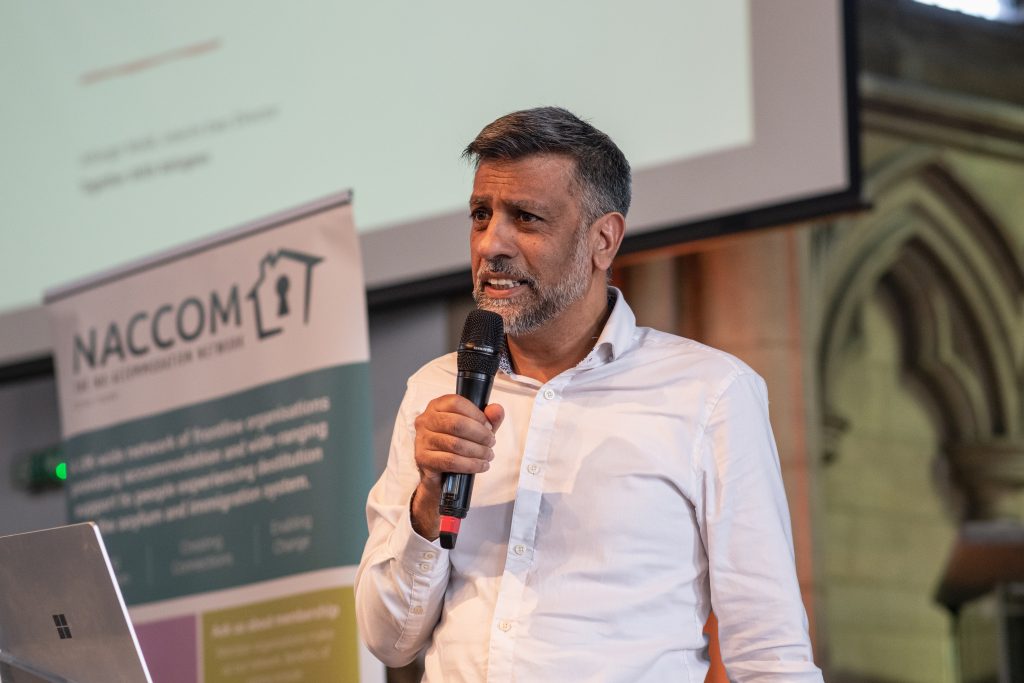
Our second keynote speaker, the Director of Together With Refugees Jehangir Malik OBE, told us about his childhood memory as the son of a Kashmiri migrant growing up in Birmingham in early 1970s, watching the National Front marching on the streets of his home city. “You could feel the lines being drawn,” Jehangir told us. “But I also remember something else: communities standing side by side. Choosing solidarity over division.”
We are living through another defining moment – not just for refugees, but for who we are as a country, Jehangir told us. Refugees are being framed not as people, but as problems. So how do we reshape the story?
“Policy follows power, and power comes from people” explained Jehangir. “Movements – not organisations – change history”. Because national change is built locally, it’s vital to build local-first collective action, shift the public narrative, and strengthen movement infrastructure. And this is where the nearly 150 organisations that make up NACCOM are central – because we are trusted locally; rooted in communities; and are closest to the lived experience of the people we empower to rebuild their lives.
Growing our resilience
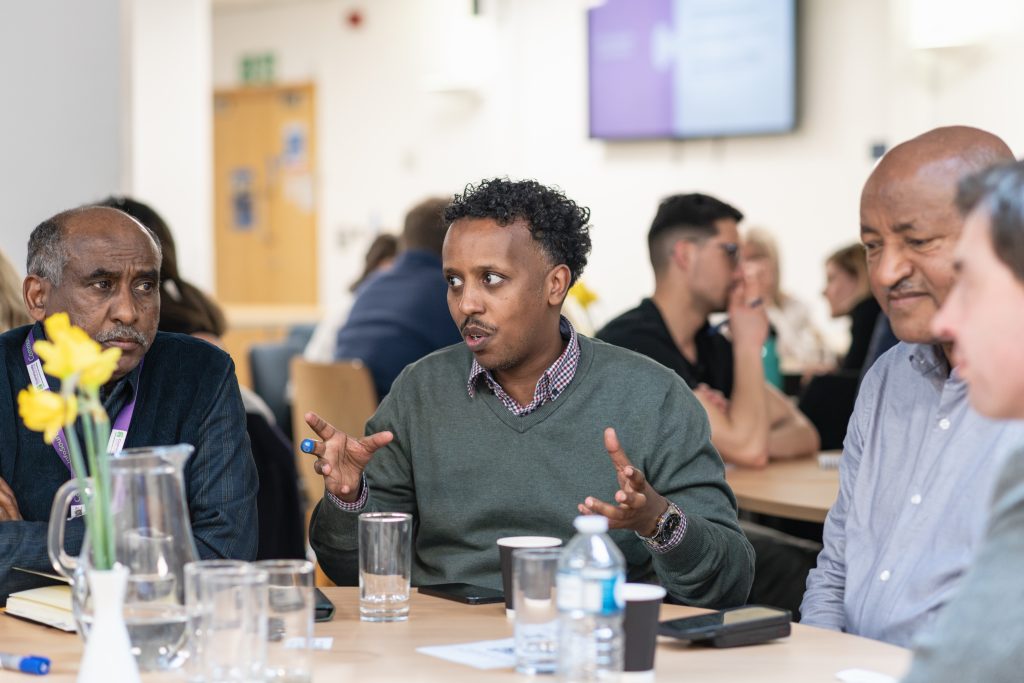
Morning workshops covered a range of topics. We learned about what practical steps to take to make sure our organisations remain sustainable and resilient. We explored how to effectively support people with No Recourse to Public Funds to move out of temporary accommodation. And we heard about a raft of changes in policy that affect the people we work with, from recent and planned reforms to the asylum system and settlement, to the new Renters’ Rights Act in England, which affects our members in many different ways.
In the afternoon, we discussed innovative ways to source housing, including by acquiring and converting empty properties. We came together to discuss the challenge posed to us all by the far right and anti-migrant politics in our communities, hearing from members who are navigating this within their own communities and successfully delivering services, and about the broader national picture. Finally, we learned about everyday practical tools to respond to trauma or high stress behaviours in those our sector supports, as well as in colleagues and volunteers.
We’re all a piece of the puzzle
By the end of the day, the wall of the main hall was adorned with individual jigsaw puzzle pieces inscribed with messages of hope and solidarity shared by attendees. We were treated to a delicious Caribbean lunch and the opportunity to engage with members and supporters from across the country.
Looking towards the future is an inevitable part of reflecting on the past. In his speech, Jonny referenced the writer and activist Leah Cowan, who wrote that living in “a country that is seemingly, constantly itching to find a way back to some mythical, long-lost white monocultural yester-year is exhausting. Still, we persist in the face of intense violence and marginalisation.” Looking forward to the next twenty years, Jehangir echoed this sentiment when he urged attendees: “Let’s build a movement that the country cannot ignore”.
Indeed, every attendee formed part of the groundswell of energy that was tangibly felt during the day. As Bridget summarised it: “We are all a piece of the puzzle. And while each piece is important, together we make a pretty amazing picture.”