
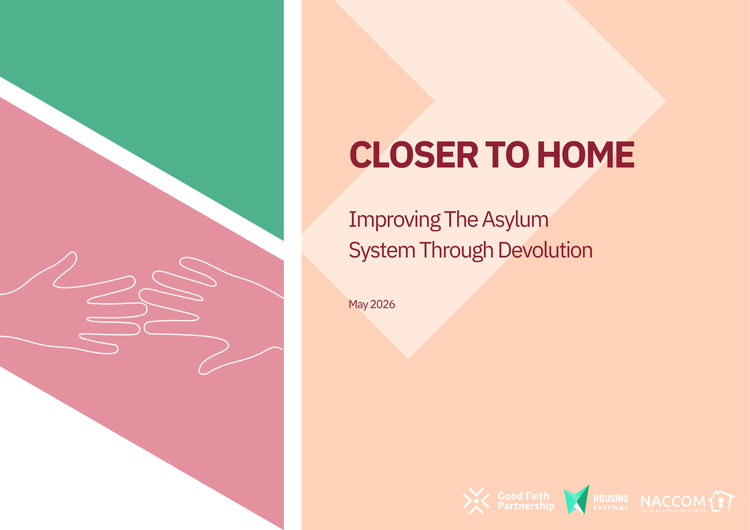
What if asylum accommodation was planned, designed and delivered closer to the communities where people live? We’re proud to have contributed to a new report, Closer to Home, published this month alongside Housing Festival and Good Faith Partnership.
A previous report by NACCOM’s Community Researchers, Treat Us Like Humans, explored experiences of residents in asylum accommodation, and laid bare the devastating impact that the isolation, poor quality housing and lack of support in the current system has on them, highlighting the urgent need for reform.
Building on this, Closer to Home is the result of months of research and conversations with leaders across the North East and South West of England. It explores the opportunity of affordable, sustainable, community-oriented models of asylum accommodation to address the current failing system.
The need for change
Treat Us Like Humans demonstrated the failure of the current asylum accommodation system to provide residents with basic, humane living conditions, as well as support to settle and build lives in their local areas. Based on in-depth conversations with thirty participants, the report highlighted key problems with the current system, including:
- Isolation and exclusion that hinders the ability to build meaningful connections.
- Barriers to accessing services that leave many feeling isolated from the very systems meant to support them.
- A pipeline into homelessness. The lack of support, combined with an inadequate move-on period, leads to high rates of homelessness after leaving asylum accommodation.
Closer to Home
The joint project with Good Faith Partnership and Housing Festival set out to identify how a better system could be delivered: one which addresses the issues above, and provides safe, dignified and affordable accommodation to people seeking asylum in the UK. Our proposal: bring responsibility for asylum accommodation closer to home. By taking the delivery of asylum accommodation away from distant, profiteering private contractors and placing it in the hands of local and regional actors, a system can be built which is aligned with local housing markets, integrated with local services and responsive to the needs of residents and local communities.
Months of conversations with local leaders suggest that this approach is both viable and well-supported. The report sets out a clear pathway to delivery via a Regional Integrated Accommodation Pilot: a low-risk, testable route to explore whether place-based coordination can deliver safe and dignified accommodation to people in the asylum system, as well as reducing cost and fostering community cohesion.